



Table of Contents
ToggleWater-based coatings have become the preferred choice for formulators who aim to reduce VOC emissions, improve workplace safety, and meet global sustainability regulations. Compared to solvent-based systems, they offer lower environmental impact without compromising performance. However, to deliver high-quality coatings with exceptional properties such as flow, stability, gloss, and durability, additives play a pivotal role.
This list covers the top water-based coating additives that enhance performance while supporting eco-friendly and regulatory-compliant formulations. Each additive category is explained with its function, benefits, and typical applications so formulators and procurement professionals can make informed choices.
1. Rheology Modifiers
Rheology modifiers control the flow and viscosity of water-based coatings, improving application performance and preventing sagging or settling.
- Provide thixotropic behavior for smooth brushing or spraying
- Enhance sag resistance on vertical surfaces
- Improve levelling and film build consistency
- Key for architectural, industrial, and wood coatings
Rheology modifiers such as associative thickeners are essential in water-based formulations. They help maintain a stable viscosity profile during storage and application, ensuring the coating spreads evenly without running or dripping. Additionally, they improve suspension of pigments and fillers, preventing settling during storage, which is critical for consistent quality.
2. Dispersants
Dispersants reduce particle agglomeration and ensure uniform distribution of pigments and fillers throughout the coating.
- Improve color strength and brightness
- Enhance stability and prevent flocculation
- Facilitate even pigment wetting
- Useful in high-pigment volume formulations
In waterborne systems, pigment dispersion is challenging due to the polar nature of water and surface tensions. Dispersants help by lowering interfacial tension between particles and the aqueous phase, resulting in stable suspensions with excellent color development. This improves coating aesthetics and performance while reducing defects such as mottling or streaks.
3. Defoamers
Defoamers prevent and eliminate foam generated during mixing, application, and curing processes.
- Break foam quickly in both air and substrate
- Improve surface appearance without pinholes
- Suitable for high-speed mixers and spray lines
- Compatible with most water-based systems
During production and application of water-based coatings, air entrainment can lead to foam that causes surface defects and poor film formation. Defoamers, typically silicones or mineral oil based, efficiently collapse surface bubbles. Choosing the correct defoamer reduces downtime, improves finish quality, and prevents common issues like cratering or fish eyes.
4. Wetting Agents
Wetting agents improve the ability of a liquid to spread across a surface, aiding substrate wetting and pigment incorporation.
- Improve substrate penetration and adhesion
- Enhance pigment wetting for better dispersion
- Reduce surface tension of aqueous systems
- Beneficial in primers and sealers
Wetting agents enhance the performance of water-based coatings by promoting superior contact between the coating and the substrate, whether wood, metal, or plastic. Better wetting improves adhesion, reduces defects, and enables formulations to perform reliably on difficult substrates. This also supports faster drying and uniform film formation.
5. Biocides / Preservatives
Biocides prevent microbial growth in waterborne coatings, protecting both the product and the end-use film.
- Inhibit bacteria, fungi, and yeast growth
- Extend shelf life of water-based coatings
- Protect wet and dry films from contamination
- Essential for waterborne systems
Because water provides an ideal environment for microbial contamination, biocides are crucial in water-based coatings. Microbial growth can spoil product quality, alter viscosity, and lead to foul odors. A well-balanced preservative system maintains stability throughout storage and ensures performance integrity over the life of the product.
6. Dispersant-Defoamer Hybrids
Hybrid additives combine the benefits of both dispersants and defoamers, improving formulation efficiency.
- Simplify additive packages
- Reduce production complexity
- Improve both dispersion and foam control
- Ideal for high-speed production lines
These hybrid additives are engineered to provide multifunctional performance in a single component. By combining dispersing and defoaming activity, they streamline formulation complexity and reduce the total amount of additives needed. This can lower costs as well as improve stability and application performance.
7. Anti-Skid / Slip Agents
Anti-skid or slip agents modify the surface characteristics of coatings to provide either textured grip or enhanced smoothness.
- Control surface friction
- Improve handling characteristics
- Useful for flooring and industrial coatings
- Reduce surface defects like blocking
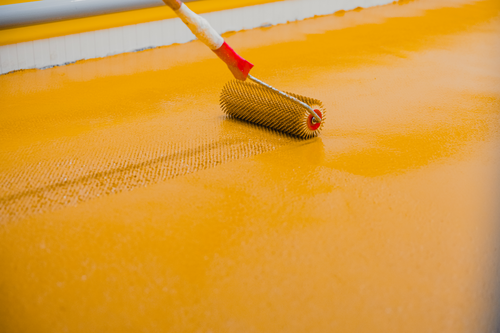
Slip agents work by migrating to the surface during film formation, modifying the surface energy and resulting in desired tactile properties. In floor coatings, anti-skid additives increase traction, while in packaging coatings, slip agents improve processability and prevent blocking during stacking.
8. Film Formers
Film formers help in the formation of continuous, durable coating films with good mechanical properties.
- Improve hardness and abrasion resistance
- Enhance gloss and clarity
- Critical for performance coatings
- Compatible with many resins and binders
Effective film formers ensure that the polymer particles coalesce into a continuous film upon drying. They influence key properties such as flexibility, adhesion, and water resistance. Well-chosen film formers balance durability with ease of application, crucial for both decorative and protective coating systems.
9. UV Stabilizers
UV stabilizers protect coatings from degradation due to ultraviolet exposure, extending the life of exterior coatings.
- Prevent color fading and chalking
- Enhance weatherability in outdoor applications
- Reduce polymer breakdown
- Compatible with waterborne systems
UV stabilizers such as HALS (hindered amine light stabilizers) and UV absorbers are increasingly important as coatings face harsher environmental conditions. By absorbing or dissipating harmful UV energy, they protect the binder and pigments, prolonging service life and maintaining gloss and color stability.
10. Crosslinkers
Crosslinkers improve the mechanical and chemical resistance of water-based coatings, forming stronger polymer networks.
- Increase abrasion, chemical, and heat resistance
- Improve film integrity
- Compatible with water-based binders
- Critical for high-performance systems
Crosslinkers such as blocked isocyanates or melamine derivatives react with binder polymers during curing to create tight networks. This translates into coatings with enhanced durability, solvent resistance, and impact performance. They are widely used in industrial and automotive waterborne coatings.
How to Select Eco-Friendly Additives for Water-Based Coatings
Choosing the right combination of additives is critical for meeting performance goals while adhering to environmental and regulatory requirements.
Key selection criteria
- VOC Content: Additives must contribute minimal VOCs to retain eco-friendly status
- Compatibility: Additives must work synergistically with binders and pigments
- End-Use Requirements: Adhesion, flexibility, hardness, and weather resistance must match application needs
- Regulatory Compliance: Biocides and specialty additives must meet regional and global safety standards
- Processing Conditions: Evaluate heat, shear, and application method requirements
Best practices
- Test additive packages in lab-scale trials before full production
- Work with reputable suppliers providing technical support and documentation
- Plan for stability, performance, and cost balance